
Coheso Team
Coheso Team
General counsel from insurance, technology, real estate, and financial services compared notes on how to adopt AI responsibly while the rules around it are still being written.
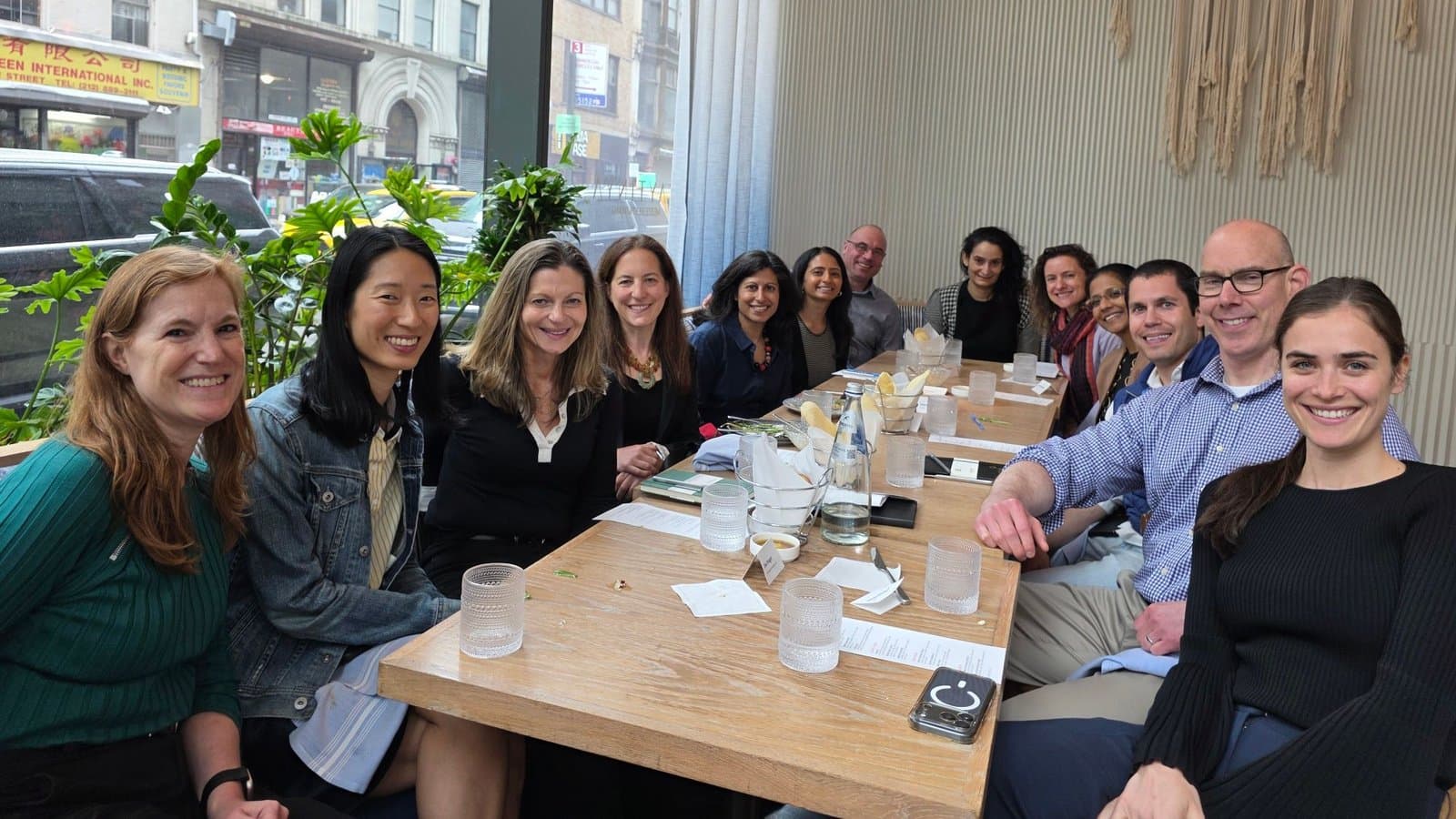
On May 6, Coheso co-hosted a lunch for general counsel and legal leaders in New York City alongside Orrick, Herrington & Sutcliffe and Tola Capital. Over a Mediterranean spread at Zaytinya by José Andrés, GCs from insurance, technology, real estate, and financial services compared notes on a question every legal department is facing right now: how do you adopt AI responsibly while the rules around it are still being written?
The conversation was anchored by Anisha Dasgupta, partner at Orrick and former General Counsel of the FTC, whose career also spans the New York Attorney General's Office, the Department of Justice, and the Office of White House Counsel. Her perspective from both sides of the regulatory table set the tone for a candid discussion.
Below, we've summarized the key themes that emerged over the course of the afternoon. They offer a useful snapshot of where in-house legal teams stand on AI adoption, regulation, and the future of legal work.
Lead with the problem, then choose the AI
Many GCs described pressure from the C-suite to "use more AI." They were supportive of adoption and equally clear-eyed about the risk of chasing a shiny new tool that doesn't fit how the team actually works. The shared view was that successful adoption begins with a specific problem the legal team needs to solve, with AI evaluated against that need.
Build trust by making accuracy verifiable
Legal teams can't afford answers they can't stand behind. Trust in AI output was one of the most discussed topics of the afternoon, especially among legal leaders in highly regulated industries, where compliance obligations raise the stakes on every response. For these teams, AI earns trust through transparency and the ability for attorneys to review its work and step in.
Drive adoption by meeting users where they already work
Even the best tool fails if people won't use it. GCs spoke about the friction of asking business partners to learn new portals and processes. The approach that resonated most was bringing legal support into the tools people already use every day, like email, Slack, and Teams, so adoption happens with minimal change management.
Give legal leaders control and visibility
Control was one of the strongest themes in the room. AI needs to fit naturally into the attorney workflow, give senior legal leaders visibility into what's being handled and how, and keep attorneys in the loop wherever their judgment matters.
Prepare for a patchwork of state-level regulation
On the regulatory front, guests discussed how state attorneys general are stepping in on AI, privacy, and consumer protection in the absence of uniform federal rules. For GCs, that means tracking a growing set of state-level expectations. The group also considered whether AI implementation could become the next focus area for the SEC and other regulators, much as off-channel communications became an enforcement priority in recent years.
Create new paths for junior lawyers to learn
As AI changes how legal work gets done, legal leaders are thinking carefully about how junior attorneys will continue to learn the craft. Much of a young lawyer's judgment has traditionally been built through hands-on experience, and GCs want to make sure that foundation stays strong.
The conversation focused on how teams can pair AI with intentional mentorship, giving junior lawyers earlier exposure to higher-value work while still building the fundamentals. It's a question that deserves deliberate attention as legal departments shape their AI strategies.
How Coheso puts these lessons into practice
It was encouraging to hear how closely these concerns map to the principles behind Coheso. Our platform meets business users in Outlook, Gmail, Slack, and Teams, escalates requests to attorneys when human judgment is needed, helps legal teams respond consistently, and gives GCs the control and visibility they asked for. Taskrabbit, for example, saw 99% adoption on day one, with AI now handling about a quarter of inquiries that previously landed on the legal team.
Thank you to Anisha Dasgupta and our co-hosts at Orrick and Tola Capital, including Sheila Gulati, Amy Chen, Mickala Wallingford, and Jake Ornstein, and to every GC who joined us. We're looking forward to the next one.